You have landed the part, agreed the fee and cleared the dates. Then another document arrives. Somewhere between the travel arrangements and the costume fitting, you are asked to give permission for your face or voice to be digitally captured.
It sounds like a technical detail. It deserves a proper conversation.
As we look towards 2027, one of the most consequential developments for actors concerns what happens to a performance after the recording stops. Digital scanning, synthetic voices and AI training are bringing new questions into casting notices and contract negotiations. Those questions affect actors building their first credits as well as established performers.
The useful response is to understand what you are being offered, what you are being paid for and what somebody might be able to do with your work afterwards.
Here are four developments worth watching as you prepare for the year ahead.
1. Your digital likeness belongs in the booking conversation
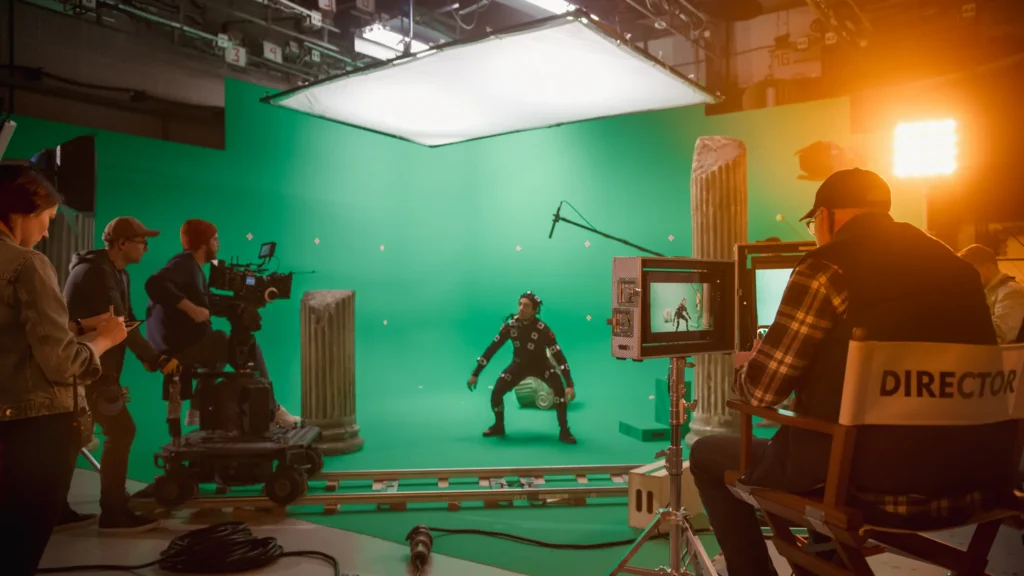
A digital scan can serve a specific production purpose, such as creating a visual effects asset. Permission to capture your likeness, however, needs careful attention to the uses being agreed.
Equity’s guidance on digital scanning encourages performers to establish the intended purpose before an engagement begins. It also recommends seeking limits that keep the use within the named production.
For actors heading into 2027, this is a practical area of professional preparation. If scanning is part of a job, ask when it will happen, what it will capture and how the resulting material will be used.
You could begin with a straightforward question: “Could you send the proposed scanning arrangements and intended uses to my agent before the shoot?”
That gives everyone time to discuss the detail. An unfamiliar consent form is much easier to assess at your desk than when a department is waiting for you on set.
2. Voice work requires a closer look at the deliverable
A voice booking might involve recording dialogue for a finished project. It might also involve supplying material used to build a synthetic voice. The distinction matters.
In October 2026, Equity issued a warning about a video game casting involving broad AI terms and an assignment of rights. Its advice highlighted the potential consequences of recordings being used to create a voice model, including future uses without further sessions or additional payment. Equity also made clear that it had not seen the full contractual terms.
That example gives actors a concrete reason to examine descriptions such as “speech model usage” or “AI training” before accepting a session.
Start by asking what the client is commissioning. Are you delivering a particular performance, or contributing to a system capable of generating further speech?
Then ask how any future use would be approved and paid for.
You do not need to become a software engineer to have this conversation. You need a clear explanation of the job, supported by terms your representative can assess.
3. The fee and the future use need to be considered together
An attractive fee can command your attention remarkably quickly. Particularly when rent has developed its own demanding subplot.
However, the amount offered only tells part of the story. You also need to understand the scope of the permission attached to it.
For any booking involving digital capture or synthetic performance, consider the project, the permitted uses, the duration and whether another company could receive the material. Ask what would happen if the client wanted to use it in a later production.
This is a useful habit to develop before 2027: assess the fee alongside the rights requested, rather than treating them as separate conversations.
A polite starting point is: “I’m interested in the project. Before confirming, could we clarify whether this permission covers only the named production and how any further use would be agreed?”
Where terms are unclear, ask your agent, union or a suitably qualified adviser to review them. The aim is to reach an informed agreement while there is still time to negotiate.
4. AI protections will remain an area to follow closely
There is an important difference between a protection being proposed and a protection already applying to your job.
Equity’s Stop AI Stealing the Show campaign calls for new personality rights over a person’s voice, face and body. Its campaign also describes efforts to secure protections through collective bargaining.
That makes this an area to watch during 2027, rather than one where actors should assume every question has been settled.
The practical implication is simple: check which agreement covers your engagement and what your actual contract says. A headline about progress elsewhere may be encouraging, but it cannot explain the terms of your particular booking.
If you work internationally, make that check for each territory and production. Keep dated copies of the documents you agree to, including any additional permissions issued during filming.
A little administration now can make a future question much easier to answer.
Prepare your questions before you need them
Nobody can promise exactly how the acting industry will develop in 2027. These developments are already giving performers a reason to become more confident about the business surrounding their craft.
Before your next booking, practise asking three questions aloud: “What are you capturing? What can it be used for? What happens if you want to use it again?”
They are reasonable questions. You can ask them warmly, professionally and without apologising for taking your career seriously.
At Actors Studio, we believe preparation should help you arrive with both creative confidence and professional awareness. As you plan your screen acting training for 2027, make room for both. Your performance deserves that attention, wherever it travels next.
