Screen acting is often described as “less is more.” That’s true, but it’s also incomplete.
The real difference between screen and stage acting is not just scale. It’s where the performance lives.
On stage, the performance is external. It needs to reach the audience physically and vocally. On screen, the performance is internal. The camera captures thought before it captures action.
This means:
- A thought can replace a line
- A glance can replace a reaction
- Stillness can be more powerful than movement
The Camera Sees Everything
A close-up removes the safety net. There’s no space to “play the emotion.” If you try to show the feeling, it often reads as artificial.
Instead, screen acting relies on:
- Genuine thought processes
- Active listening
- Emotional truth without pushing
Actors who succeed on screen are often those who trust that doing less actually communicates more.
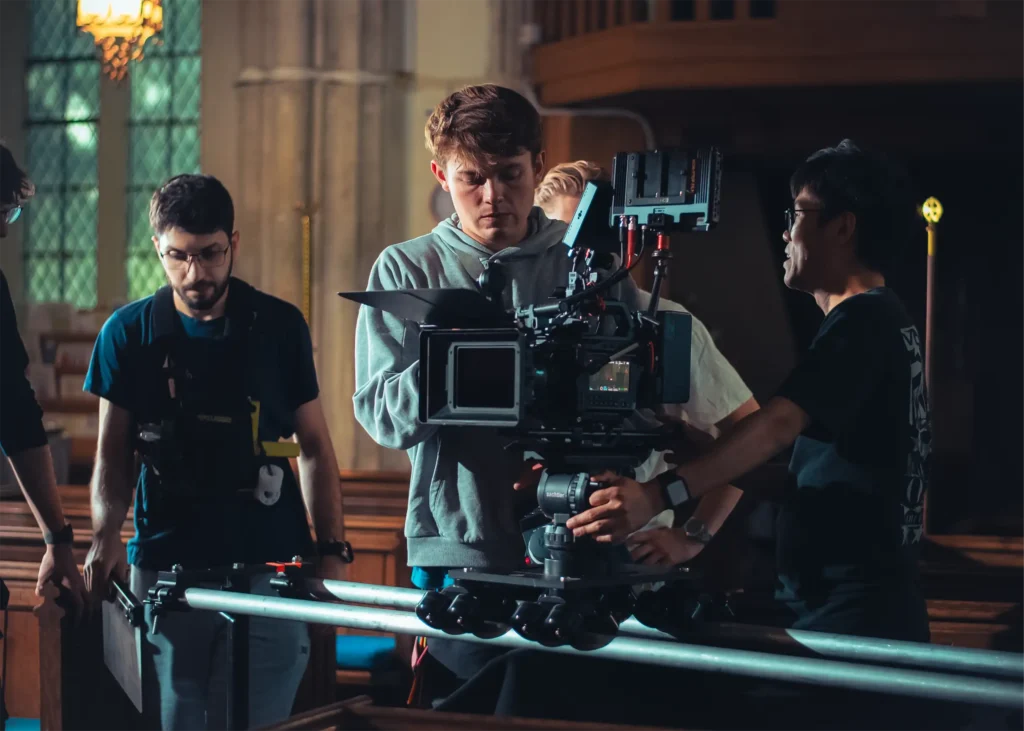
Technical Awareness Matters
Unlike theatre, you are working within a frame:
- You must hit marks precisely
- Your eyeline must be consistent
- Your performance must match across takes
If you cry in take one, you need to be able to reproduce that emotional state in take five, often hours later.
The Common Mistake
Actors transitioning from stage often:
- Over-project
- Over-gesture
- “Perform” rather than exist
The shift is psychological. You’re no longer presenting to an audience, you’re allowing the camera to observe you.
The Goal
The goal of screen acting is simple:
To behave truthfully under imaginary circumstances — in a way that feels completely real on camera.
